lab · live
The Ulmer Hocker as a 3D configurator
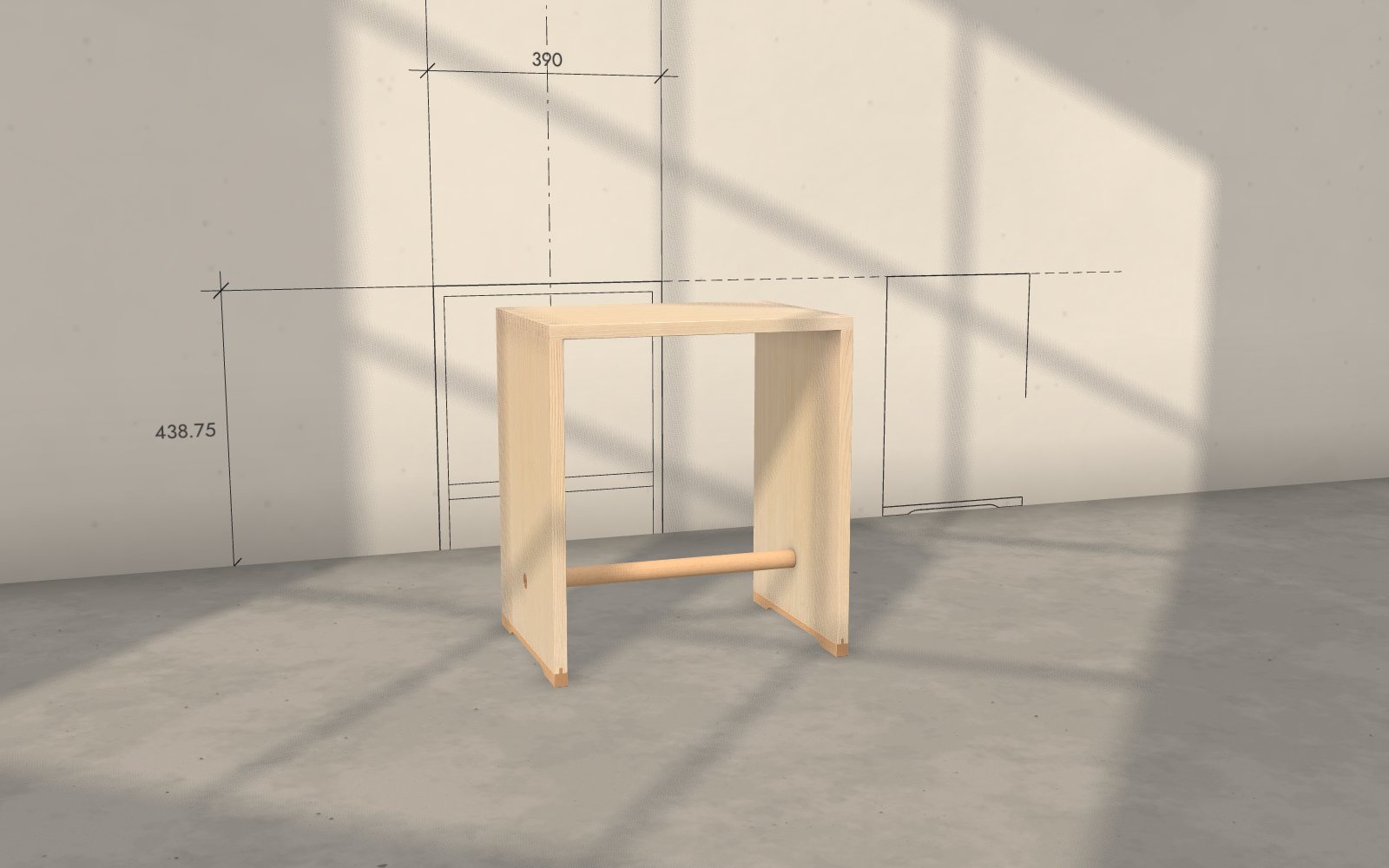
The Ulmer Hocker by Max Bill and Hans Gugelot (1954), made by wb form, as a 3D configurator by Alzato. It shows 15 finishes, the measured finger joints, the real parts in the exploded view and the technical drawing at 1 : 1 on wall and floor.
- design
- max bill, hans gugelot, 1954
- maker
- wb form
- as of
- November 2026
This configurator, with enquiries to you and your dealers, for your piece.request a feasibility check free · reply within 2 working days
01 · shows
Details: what the configurator tells
The rings on the stool open short cards. Here are the same texts to read, for the spruce version.
- 15 finishes: 2 woods, 7 colours, 6 editions
- The drawer stool of 1962 as an option
- Exploded view of the real parts
- Drawing at 1 : 1 on wall and floor
- Details with camera flight and story
- Three lights: sun, north light, studio
- View in your room (AR) on iPhone, iPad and Android
- Guide price per finish
- Downloads: data sheet, packshots, CAD data
- Share link and enquiry to the nearest dealer, with a map
finger joints
solid spruce
Seat and sides lock into each other like folded hands. The joint holds the stool together without a single screw, and it is the only ornament: along each edge the end grain shows how the piece is made.
crossbar
beech
The beech bar braces the two sides and gives your feet a rest. Turn the stool over and it becomes a handle for carrying books, dishes or tools. A small wedge locks each end, sanded flush with the side.
beech foot rail
beech
Spruce is light but soft. So the stool stands on rails of hard beech, which take the daily wear the floor deals out. The relief in the middle keeps it steady on uneven floors.
spruce
spruce, sanded and untreated
Three boards of solid spruce, nothing more. The wood keeps the stool light enough to carry in one hand. The surface is only sanded; over the years it darkens and takes on the marks of use.
8 : 6 : 9
max bill’s original plan
Length, depth and height follow the ratio 8 : 6 : 9, noted by Max Bill on the original plan. It lets the stool serve as a seat, a side table and, laid on its side, a shelf.
signature
stamp on spruce
Under the seat every stool carries Max Bill’s signature. He designed it in 1954 with Hans Gugelot for the students of the Ulm School of Design.
02 · Finishes
15 Finishes
| Wood | natural spruce · lacquered walnut |
|---|---|
| Colours | lemon yellow · bright orange · fire red · sky blue · dark blue · apple green · black |
| Editions | lilac (2022) · dark green (2023) · pink (2024) · sage (2025) · burgundy (2026) · pure white (2027) |
product data
| dimensions | 390 × 292.5 × 438.75 mm |
|---|---|
| weight | 2.9 kg |
| wood | solid spruce; crossbar and foot rails beech |
| finish | sanded and untreated |
| maker | wb form |
| made | in switzerland, in a workshop for people with disabilities |
03 · build
About this build
| Model | Generated from the product’s dimensions, with real finger joints: 8 mm, measured on the stool |
|---|---|
| Material | Spruce from photographs of the real stool, walnut from a flatbed scan of a seat, colours measured on the stain samples |
| Measured | Laptop 120 frames per second, iPhone 11 Pro 60 frames per second (14 November 2026, Chrome) |
| Languages | German and English |
| Embedding | iframe, as on this page |
Both pieces are designs by Max Bill and are made by wb form. We show them with wb form’s consent.
What would your piece look like here?
Send us a link, a few photos or a drawing. Within two working days you receive a feasibility sheet: what can be shown, what it costs, how long it takes. Free and without obligation.